Agentic engineering is the work of designing, running and supervising AI agents. An agent is an AI system that is given a goal, plans some steps, uses tools to act, checks what happened and continues, over many steps. A person stays accountable for what it does.
This is a newer area, and the vocabulary is still settling. Different teams use the words differently. In this article we describe the ideas as published by the companies that build these systems, and we say clearly when something is our own plain-language summary.
Workflows and agents are not the same thing
Anthropic's engineering article "Building effective agents" draws a useful line. It calls the whole family "agentic systems", then separates two kinds. Workflows are systems where models and tools are orchestrated through predefined code paths. Agents are systems where the model dynamically directs its own process and tool use, keeping control over how it accomplishes the task.
A workflow is like a recipe card that is followed in the same order each time. An agent is more like a capable assistant who is told the goal and decides the order. A workflow is more predictable. An agent is more flexible, and less predictable.
Start with the simplest thing that works
The same article recommends finding the simplest solution possible and adding complexity only when needed. That may mean not building an agentic system at all. It notes that agentic systems often trade speed and cost for better performance on a task, so you should ask whether the trade is worth it. For many applications, it says, a single model call with good retrieval and examples is enough.
The article also describes common workflow patterns that sit between a single call and a full agent, such as prompt chaining, where one step's output feeds the next, with checks in between. If you can write the steps down in advance, a workflow is often the better choice. Reach for an agent when the steps cannot be known ahead of time.
What an agent loop looks like
Anthropic's Claude Code documentation describes an agentic loop with three phases that blend together: gather context, take action and verify results. A question about a project might need only the first phase. Fixing a bug may cycle through all three several times. At each step the model uses what it learned from the previous one.
- Gather: read files, search, ask questions.
- Act: edit a file, send a draft, run a command.
- Verify: run a check, compare with the goal, look for mistakes.
The verify step matters most. An agent that never checks its work will repeat its mistakes quickly.
Keeping a human accountable
The more an agent can do, the more careful the setup needs to be. These are plain habits we recommend, in line with the safety ideas in the sources below.
- Give the smallest permissions that let the job be done. Read-only access first. Write access only where needed.
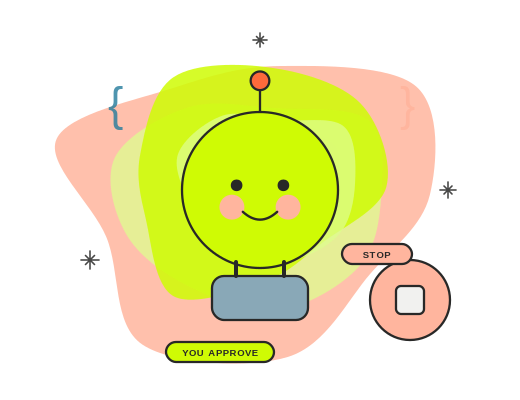
- Require a person to approve actions that are hard to undo, such as deleting files, sending messages outside the team, spending money or changing live systems.
- Work in a copy or a test area before touching real data.
- Keep a record of what the agent did, so someone can review it.
- Set limits: a maximum number of steps, a time limit, or a budget.
- Review the result yourself. Do not treat "the agent said it is done" as proof.
Claude Code's documentation includes settings for what the tool may do and for checkpoints that let you undo changes. Other tools have their own versions, and the names and defaults differ and change over time, so check the current documentation for the tool you use.
Why agents still need a careful hand
Anthropic's engineering team has published honest notes about where long-running agents struggle. In one post about long tasks, it describes two failure patterns it saw: the agent tried to do too much at once and ran out of room halfway through, and a later session looked at the progress so far and declared the job done too early. The fix was to break the work into smaller steps and leave clear notes for the next session. The lesson is not that agents are useless. It is that they need structure and supervision.
The same Anthropic article on agents lists principles it follows when building them: keep the design simple, show the agent's planning steps so people can follow them, and put effort into the way the agent uses its tools.
What this looks like for you
If you are not a developer, agentic engineering may simply mean using an agent feature in a tool you already have, with care. Start with a low-risk task, such as collecting public information into a table. Say what it may and may not touch. Read the result. Then widen the job a little.
If you are a developer, it means choosing between a workflow and an agent, giving the agent a small set of well-described tools, adding checks and tests, setting permissions, and deciding where a human signs off. The next article in this series covers the scaffolding around an agent in more detail.
Sources used for this article, as they stood when we read them. Pages may change after we publish.
- Anthropic, Building effective agents: https://www.anthropic.com/engineering/building-effective-agents
- Anthropic, Effective harnesses for long-running agents: https://www.anthropic.com/engineering/effective-harnesses-for-long-running-agents
- Claude Code Docs, How Claude Code works: https://code.claude.com/docs/en/how-claude-code-works
Common questions
What is the difference between a chatbot and an agent?
A chatbot answers a message. An agent is given a goal and then works towards it, choosing steps and using tools such as search or file access along the way. Anthropic describes agents as systems where the model directs its own process and tool use.
Is agentic engineering the same as vibe coding?
Not necessarily. We use the term for building and supervising agents with clear goals, limits and review. Vibe coding is a looser, more casual style of working with AI on code. Different people use these words in different ways, and the meanings are still settling.
Who is responsible when an agent makes a mistake?
The people and organisation using it. An agent does not carry accountability. That is why permissions, logs and human approval for important actions matter.
Official pages to check
AI tools change quickly. Check the vendor's current help page before you act, and review anything an AI tool produces before you rely on it.